You are here: Home

BIOEN - Bioenergy Program

Our team

The Sugarcane Transcriptome

We study signaling and regulatory networks in sugarcane and develop tools for a systems biology approach in this grass. As a starting point we intend to characterize three agronomical traits of interest: drought, brix and lignin content.

We are doing an integrated analysis of the sugarcane transcriptome and physiological changes associated to sucrose content, stress responses and fiber quality and content. We would like to be able to alter carbon partition in this crop to generate an energy grass. As a starting point sugarcane metabolic pathways are being mapped in conjunction with the transcriptome data.

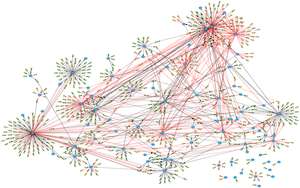
We are focusing on the study of gene categories with a well known regulatory role (Transcription Factors, Protein Kinases and Phosphatases), producing transgenics and developing a database and computacional tools to integrate the several levels of information.

Read more...

Sugarcane Genome Sequencing

Sugarcane cultivars derive from a recent interspecific hybrid obtained by crossing Saccharum officinarum and Saccharum spontaneum and represent relevant feedstock used worldwide for biofuel production.

The challenge in a sugarcane sequencing project is the size (10 Gb) and complexity of its genome structure that is highly polyploid and aneuploid with a complete set of homo(eo)logous genes predicted to range from 8 to 10 copies (alleles). Although sugarcane's monoploid genome is about 1 Gb, its highly polymorphic nature represent another significant challenge for obtaining a genuine assembled monoploid genome.

Read more...

Transcription Factors and Regulatory Networks

We intend to implement the ChIP-Seq technology in sugarcane, to identify TF targets and gene promoters.

The results will have multiple direct consequences on breeding programs that frequently select for CREs and TF changes in search for genotypes better adapted to the environment and with increased agronomical performance.

We also participate in the development of the GRASSIUS database to establish sugarcane, rice, maize and sorghum regulatory networks.

Read more...

Sugarcane Protein Kinases

Protein Kinases activate signaling cascades in response to environmental stimuli and our studies point to a predominant role of PKs in the regulation of sucrose content and drought responses.

To identify new genes associated to brix, drought and lignin content we are characterizing the transcriptome of genotypes and cultivars that contrast for these traits using olinonucleotide arrays. Genes of interest will be functionally evaluated by generating transgenics altered for their expression. A catalogue of Sugarcane Signal Transduction components has been produced.

Read more...

Development of biotechnological tools for sugarcane

Sugarcane current production worldwide is in the range of 75 tons/ha. We have calculated its theoretical potential to be 380 tons/ha.

We believe that biotechnology can help increase yield in this grass but biotechnological tools adequate for sugarcane are unavailable. Our group, together with other groups in the BIOEN Program is sequencing the sugarcane genome, annotating the genome and producing gene catalogues, developing methods for sugarcane transformation and phenotyping and developing an integrated database with datamining tools for this crop that we believe may help the community that works on sugarcane improvement.

Read more...

Sucest-Fun Database

To integrate the immense amount of public data and those generated by our group a robust computational infrastructure and database has been developed. The SUCEST-FUN database integrates the SUCEST sequences, promoters, CREs, expression data, agronomical, physiological and biochemical characterization of sugarcane cultivars.

Read more...

BIOEN Fapesp Bioenergy Program

The BIOEN Program aims to integrate comprehensive research on sugarcane and other plants that can be used as biofuel sources, thus assuring Brazil’s position among the leaders in the area of Bioenergy.

Read more...

About


Dr. Glaucia Souza holds a degree from the Biosciences Institute of University of São Paulo  (1988), PhD in Biochemistry at the Institute of Chemistry  (1993), post-doctorate in molecular genetics at La Jolla Cancer Research Foundation  (1994) and post-doctorate in molecular genetics at Baylor College of Medicine  (1996).

Post-doctoral position for two years at University of São Paulo, Brazil

Docs Download

Full details about all template features can be found in comprehensive documentation package available for free download.

Download documentation

Who's Online

We have 12 guests and no members online